Consultant Corneal Surgery · Colchester, Essex
Fuchs’ Endothelial Dystrophy Treatment in Essex
Specialist DMEK corneal transplantation for Fuchs’ dystrophy — the ultra-thin inner-layer graft with the fastest recovery and lowest rejection rate. Combined with cataract surgery where needed in a single operation. Led personally by Mr Hatch Mukherjee, fellowship-trained corneal transplant surgeon.

Professional memberships, fellowships & leadership roles




Specialist DMEK Surgery for Fuchs’ Dystrophy
DMEK is the most technically demanding corneal transplant procedure — transplanting a sheet of tissue just 10–15 microns thick requires exceptional precision and experience. It is not performed at all transplant centres, and outcomes vary significantly with surgical volume and expertise.
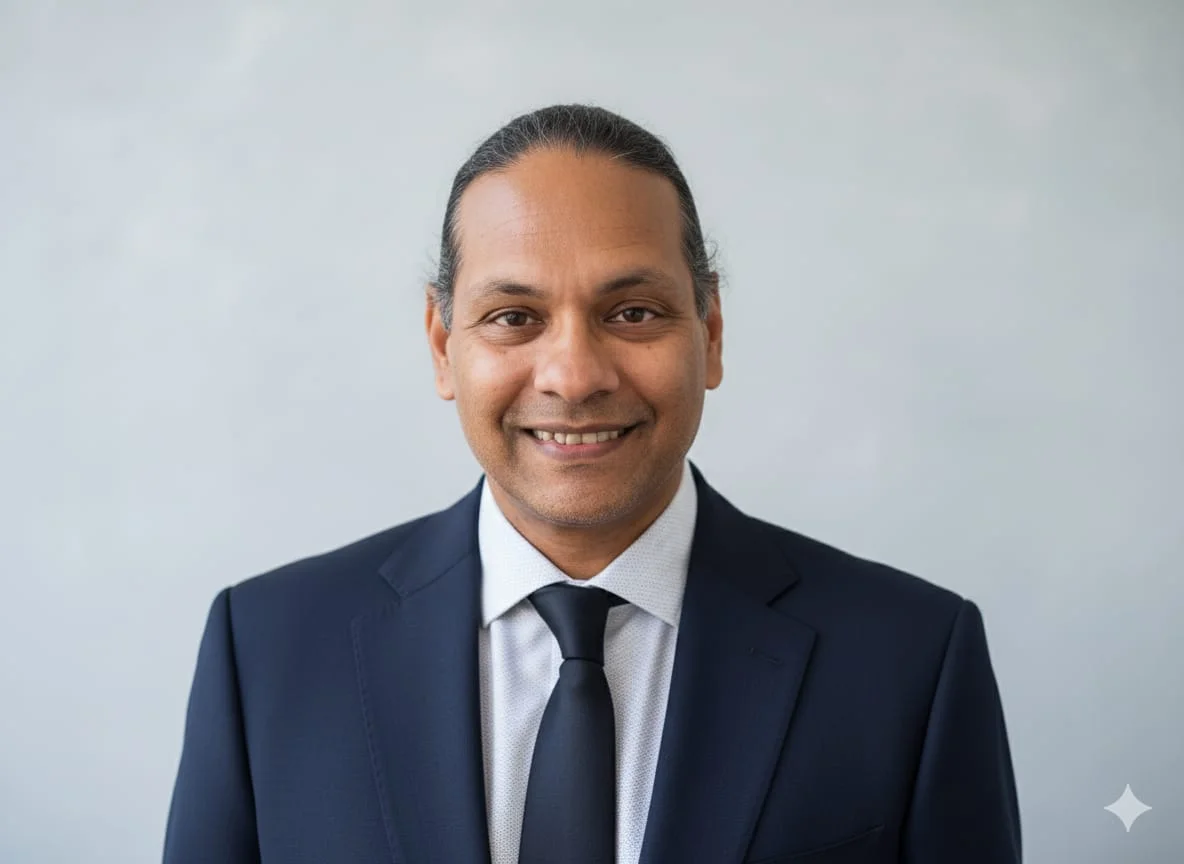
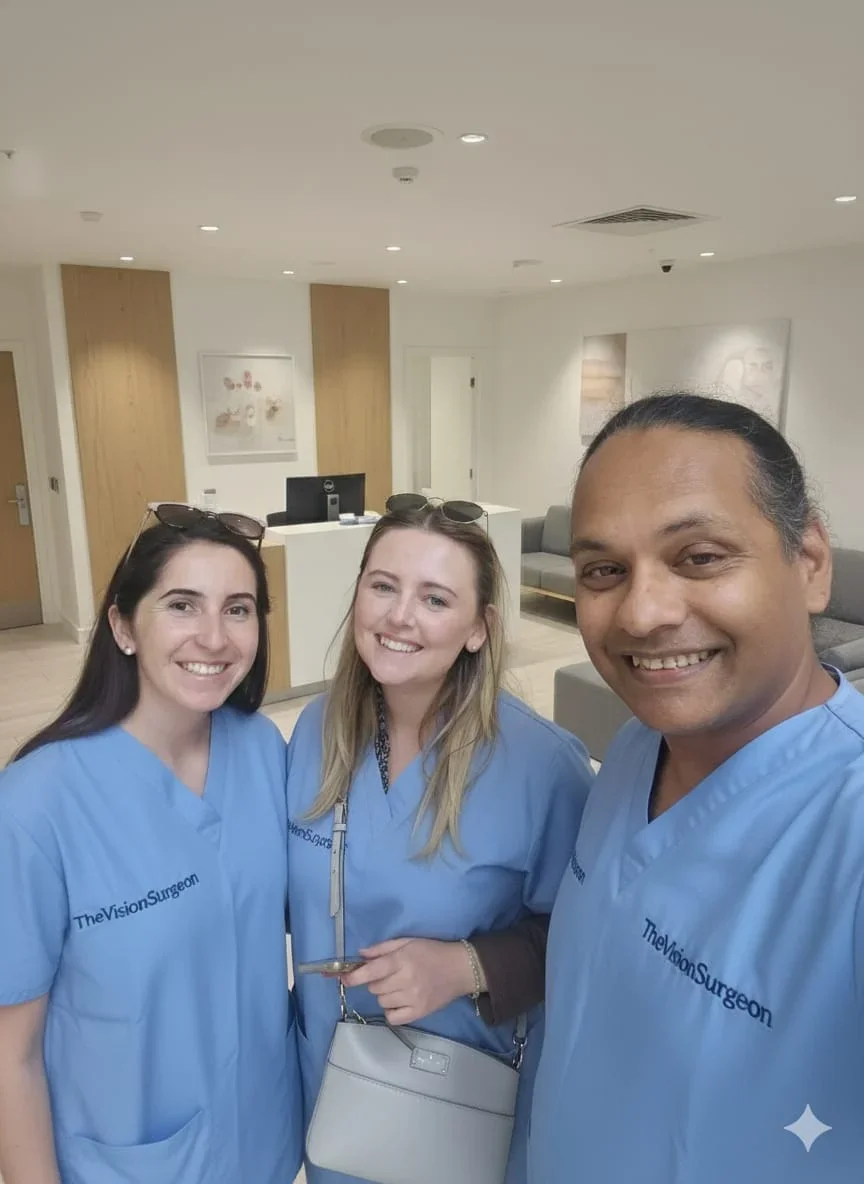
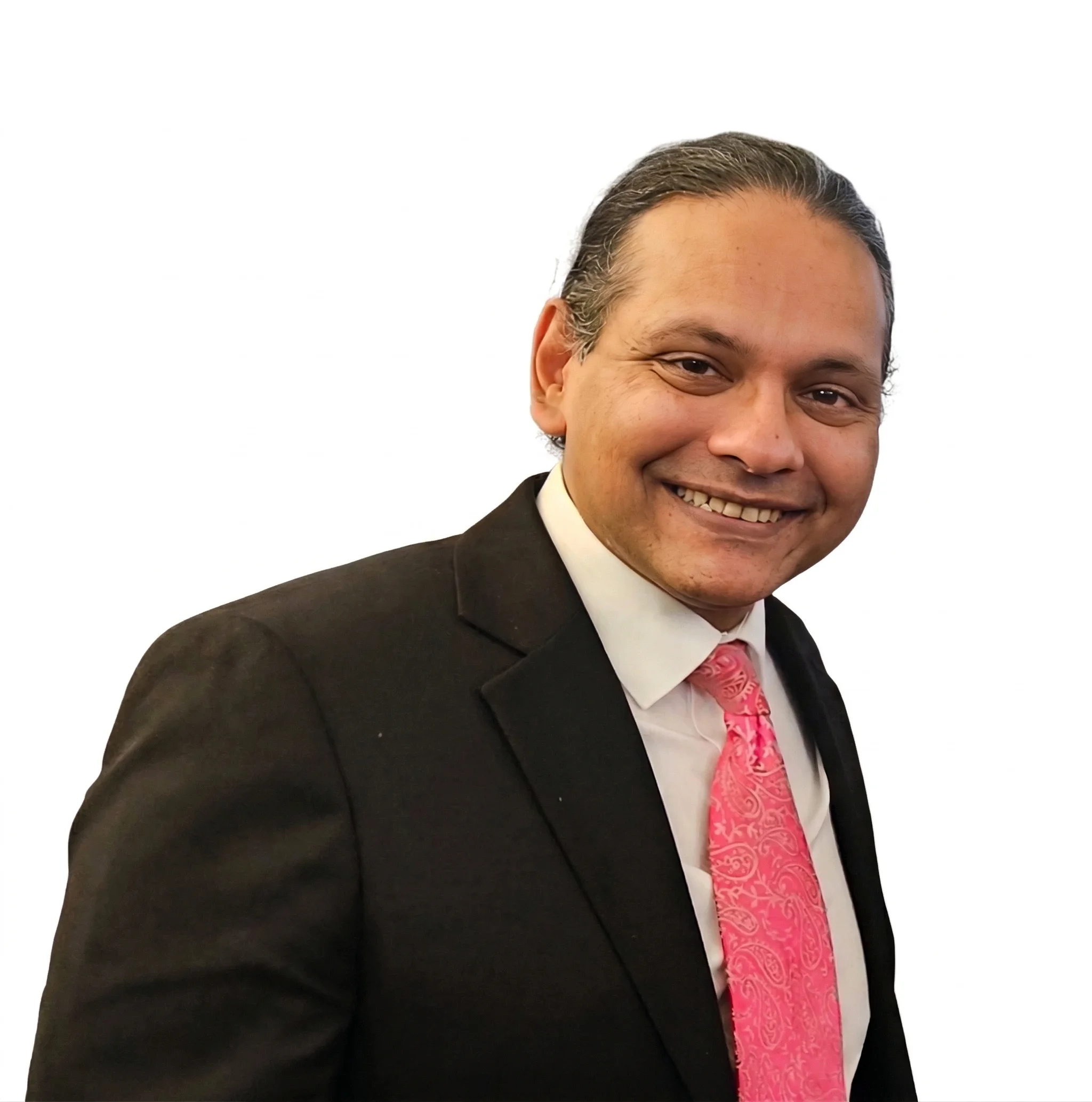
Mr Mukherjee is a fellowship-trained corneal surgeon with over 20 years’ experience in anterior segment surgery, including DMEK for Fuchs’ dystrophy and other endothelial disease. He performs the procedure using femtosecond laser assistance for accuracy not possible with manual technique, and routinely combines DMEK with cataract surgery where indicated — addressing both conditions in a single, carefully planned operation.
Sub-specialist corneal expertise
Mr Mukherjee’s triple fellowship in corneal disease, refractive surgery and glaucoma means your entire anterior segment is managed by a single expert who understands the full picture.
You see the consultant, always
Every consultation, every operation and every follow-up appointment is with Mr Mukherjee personally. Your Fuchs’ journey is never delegated to a junior team member.
Femtosecond laser precision
Laser-assisted preparation of the donor graft achieves micron-level cut accuracy, improving graft handling, attachment and reproducibility compared with manual technique.
Combined DMEK & cataract in one sitting
The triple procedure eliminates a second operation, second anaesthetic and second recovery period — the most efficient route to optimal vision for patients with both conditions.
98% of patients would recommend Mr Mukherjee.
Verified through PHIN — the independent Private Healthcare Information Network.
"I left reassured and confident in the consultant and well informed about the options available to me."
"Innovative approach... my vision has surpassed both of our expectations."
"The entire team made me feel at ease from consultation to aftercare."
What is Fuchs’ Endothelial Dystrophy?
Fuchs’ dystrophy is a hereditary condition affecting the endothelium — the single innermost layer of cells lining the cornea. These pump cells maintain corneal clarity by keeping excess fluid out of the corneal tissue. In Fuchs’, they progressively fail and die.
As cell density falls, the cornea gradually waterloggs and thickens. Vision becomes increasingly blurred — typically worse on waking (when the eyelid has been closed and fluid accumulates overnight) and improving through the day as evaporation from the open eye reduces swelling. Over time, the cornea becomes permanently hazy, and in advanced disease, painful blisters form on the surface.
Often misdiagnosed as dry eye: Early Fuchs’ closely mimics dry eye disease — glare, fluctuating vision and general visual fatigue. An endothelial cell count and corneal thickness measurement are needed to distinguish the two. If drops are not helping, a specialist assessment is warranted.
Signs & Symptoms to Look For
Blurred vision on waking — characteristically worse in the morning and improving through the day as the eye is open
Glare and halos — especially at night or in bright light; lights appear to have a haze or starburst around them
Fluctuating vision — visual clarity varies across the day or between humid and dry conditions
Eye pain or discomfort — in later stages, corneal blisters (bullous keratopathy) cause significant pain and light sensitivity
Reduced contrast sensitivity — colours appear washed out; faces harder to distinguish in low contrast settings
Family history — Fuchs’ has a strong hereditary component; first-degree relatives of affected patients are at elevated risk
DMEK — The Gold Standard for Fuchs’ Dystrophy
DMEK (Descemet Membrane Endothelial Keratoplasty) selectively removes only the failed endothelial layer and replaces it with a precisely prepared donor graft just 10–15 microns thick — a fraction of a human hair. The rest of your own cornea is preserved.
- Performed under local anaesthetic — awake but completely comfortable throughout
- Day case: you arrive, have surgery and go home the same day
- A small bubble of air is placed inside the eye to hold the graft in position while it attaches naturally
- No sutures required — the graft self-adheres to your own corneal surface
- Visual improvement begins within days to weeks as the graft settles and swelling resolves
Fuchs’ Dystrophy & Cataract — Solved in One Operation
Fuchs’ dystrophy and cataract commonly coexist — both cloud vision, and both would require separate surgery if treated independently. The combined DMEK and cataract procedure removes the cloudy natural lens, implants a precisely calculated artificial lens and replaces the diseased endothelium in a single, carefully staged operation.
One anaesthetic. One recovery. One set of follow-up visits. For appropriate patients this is both the most efficient and the best clinical approach — avoiding the risks of performing cataract surgery on a recently transplanted cornea, and shortening the total time from diagnosis to clear vision.
Private DMEK Surgery — Why Patients Choose Not to Wait
NHS waiting times for DMEK corneal transplantation in many parts of England currently exceed 12 months. For a condition that progressively worsens during that time — affecting driving, reading, work and daily life — the cost of delay extends well beyond inconvenience.
Private DMEK surgery with Mr Mukherjee means:
- Assessed and operated promptly — no waiting list; timeline determined by your clinical need, not NHS capacity
- Consultant throughout — Mr Mukherjee conducts every consultation, performs every operation, leads every follow-up
- **Combined DMEK & cataract available **— most efficient route to visual recovery when both conditions are present
- Bilateral disease planned strategically — if both eyes are affected, we plan the sequence carefully to minimise your total time with impaired vision
- Transparent fixed-fee packages — no unexpected charges; all-inclusive pricing discussed at consultation
Mr Mukherjee provides both NHS and private corneal transplantation. If your GP or optometrist has identified Fuchs’ dystrophy, or if you have been placed on a waiting list, a private assessment will clarify your options and help you make an informed decision about timing.
Ready to discuss Fuchs’ dystrophy and DMEK with a specialist?
Book a consultation with Mr MukherjeeFrequently Asked Questions
Expert DMEK surgery for Fuchs’ dystrophy in Essex.
Mr Hatch Mukherjee provides specialist diagnosis and surgical treatment for Fuchs’ endothelial dystrophy in Colchester. You will be seen and treated by the consultant personally at every stage.